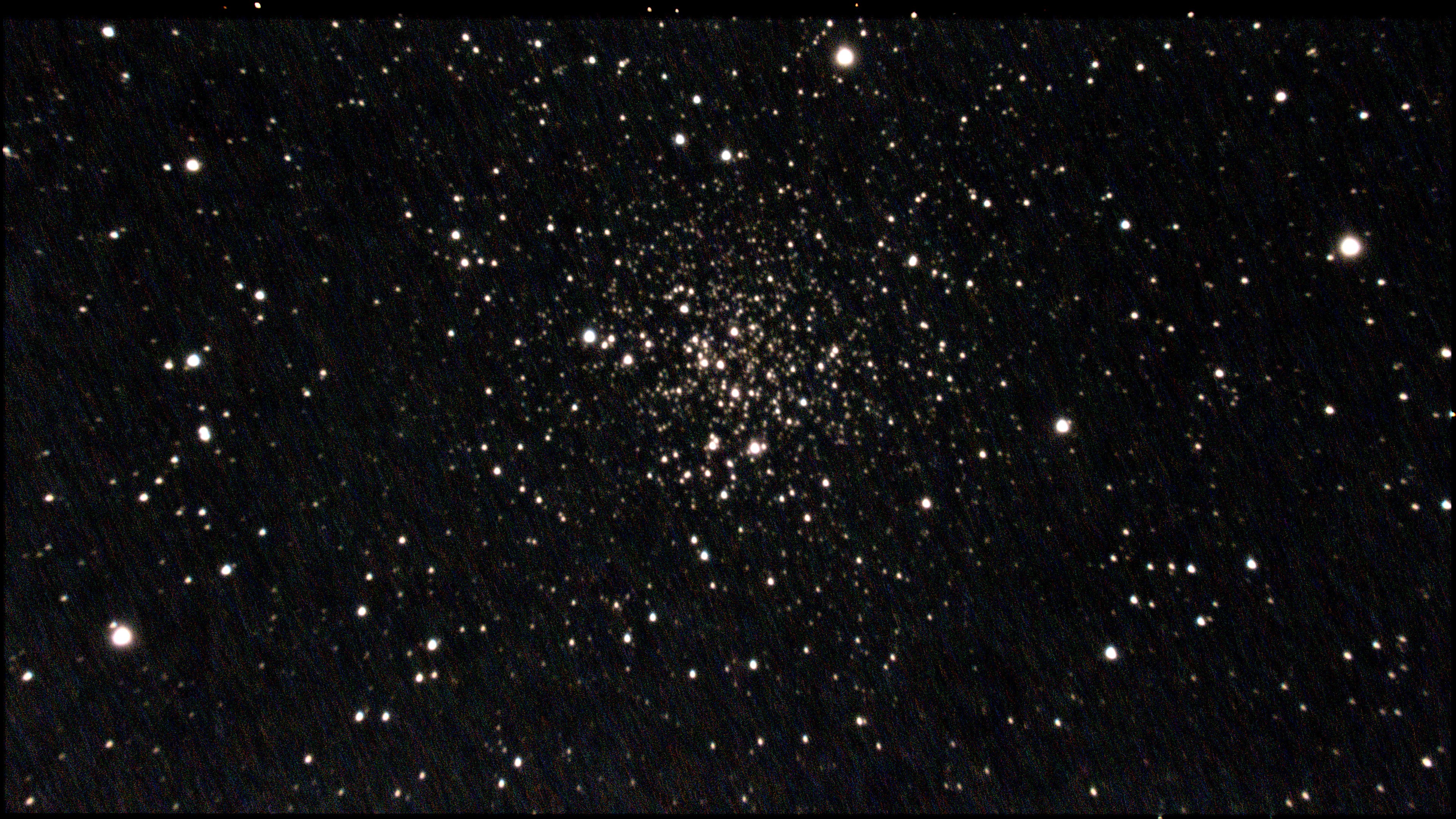
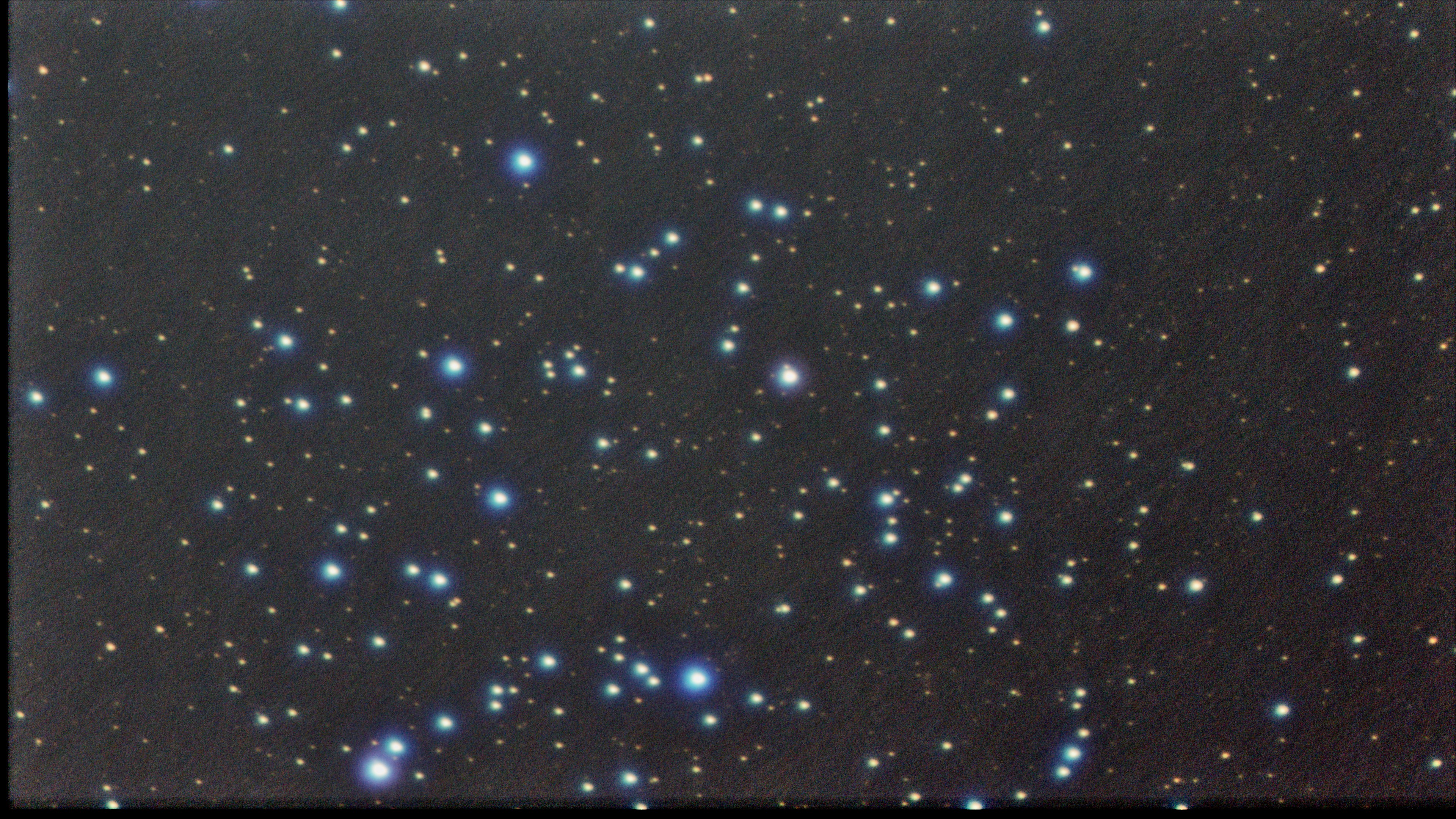
I'm talking about the ASI Live Stacking that it will stack the first image and then throw the others away with the "matched triangles" error. Here's why I can't understand it. This first image is of NGC 2158. It works fine. Stacks for 10 minutes and I never get the error. But, anything else...forget it. The second image is of M35. Looks a lot easier to stack. "Matched triangles error", every frame discarded but the first. I made the exposure time 3 minutes on M35, to make sure each image to be stacked had plenty of stars. No luck. And the NGC object's individual exposures were only 10 seconds. I've tried contrast, everything, and after trying a few hundred objects only this NGC cluster works with it. I cannot see what makes it special. What's really frustrating is that it was a really nice piece of functionality, now that I've seen it working. But I'm totally stumped about why it would not be able to handle something like those frames of M35. If there's a log of the run that I haven't noticed, I'm sure it just would say, "59 out of 60 images discarded; cannot find matched triangles". Maybe it would be most productive to compare the specifics with someone that has no problem getting it to work. There must be something. Oh, and the NGC object was taken with an instrument with a very small field of view. I would think my 120mm refractor with its wide field would be better for finding the stars it wants. It's never worked with it. By comparison, the Skywatcher Skymax 180 that took the NGC image has a lot smaller field of view. But it couldn't handle M35, same variables, same settings, same telescope, just moved a little over a degree away. That rules out almost any environmental variable.