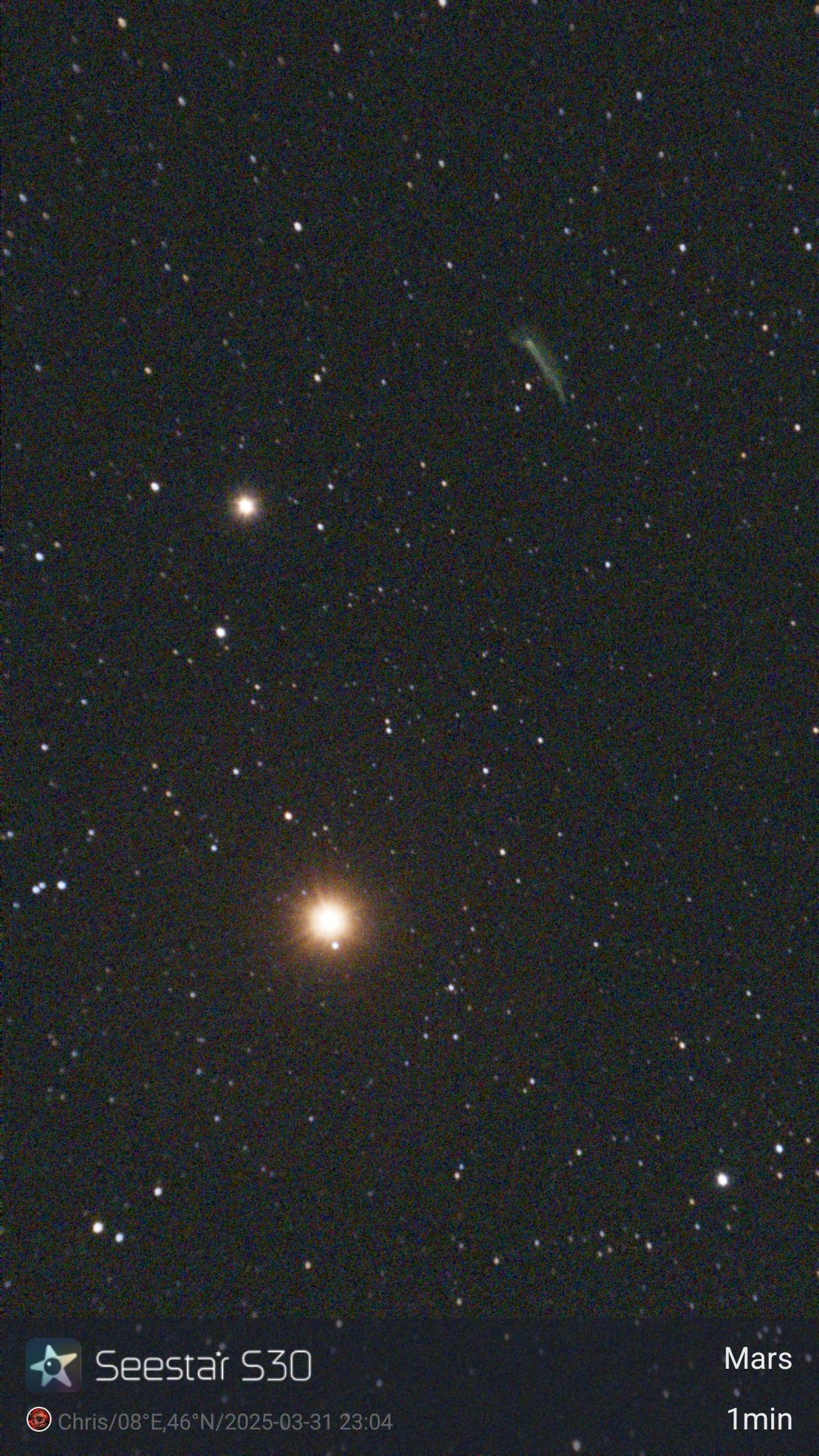
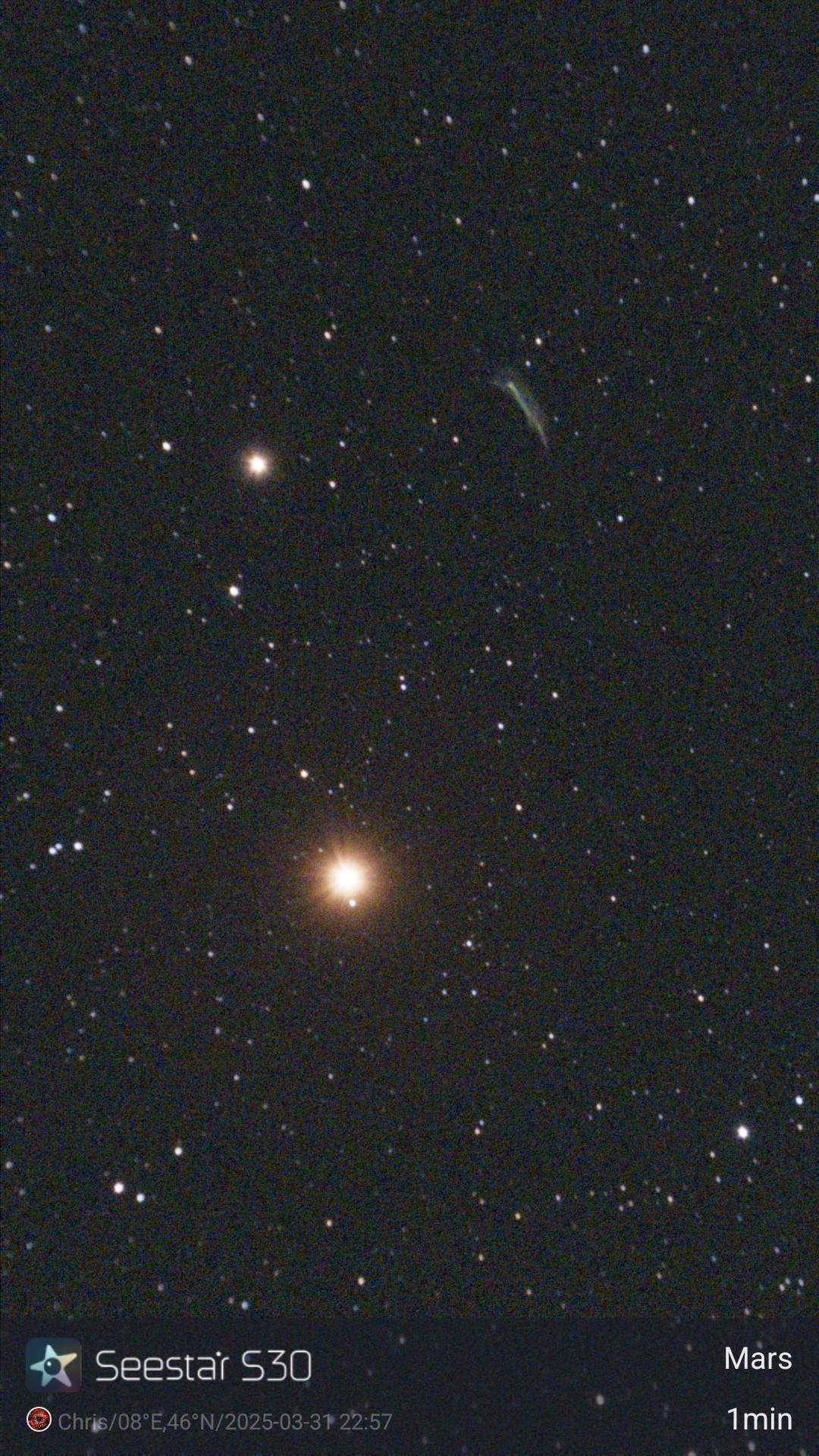
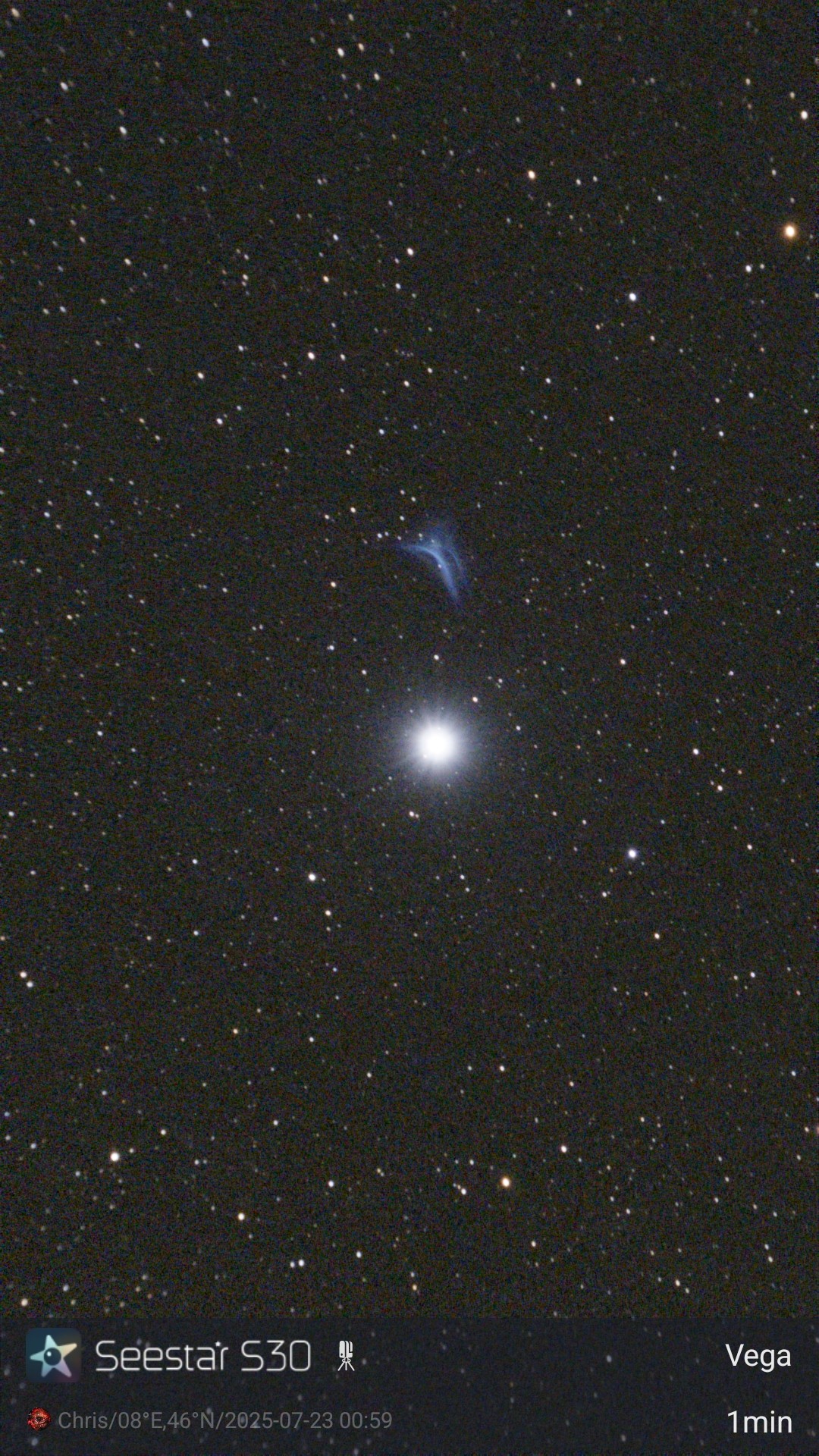
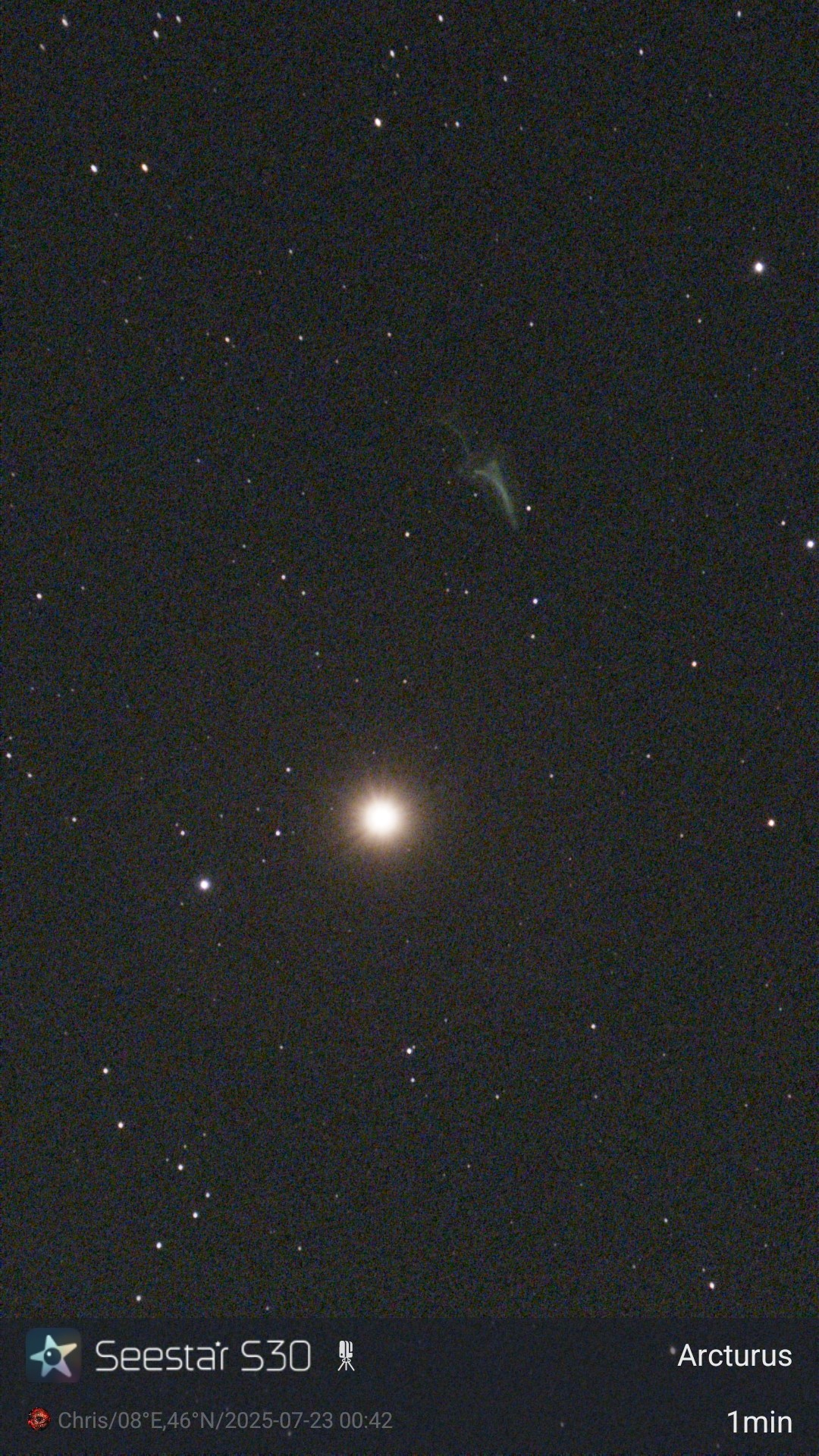
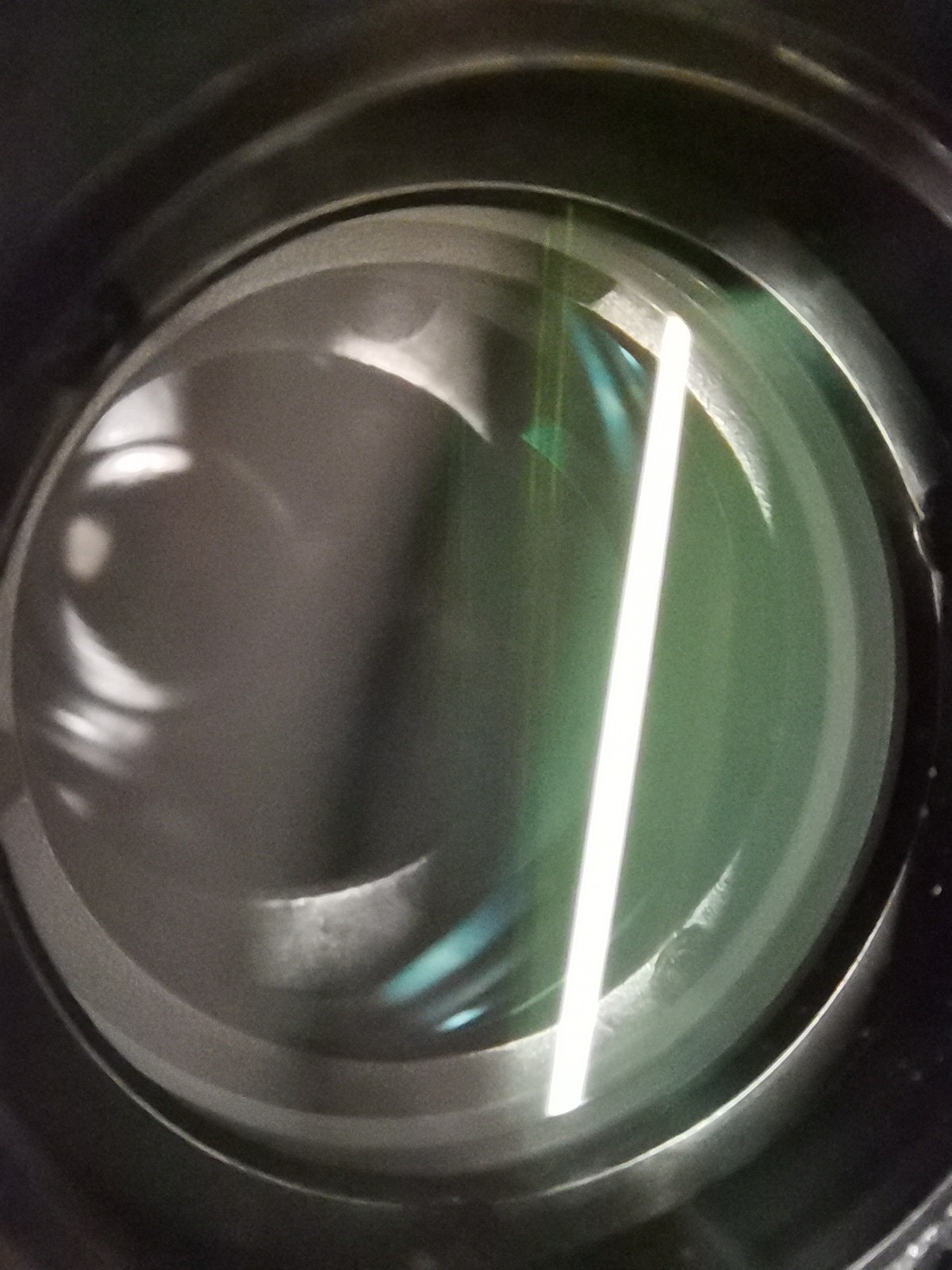
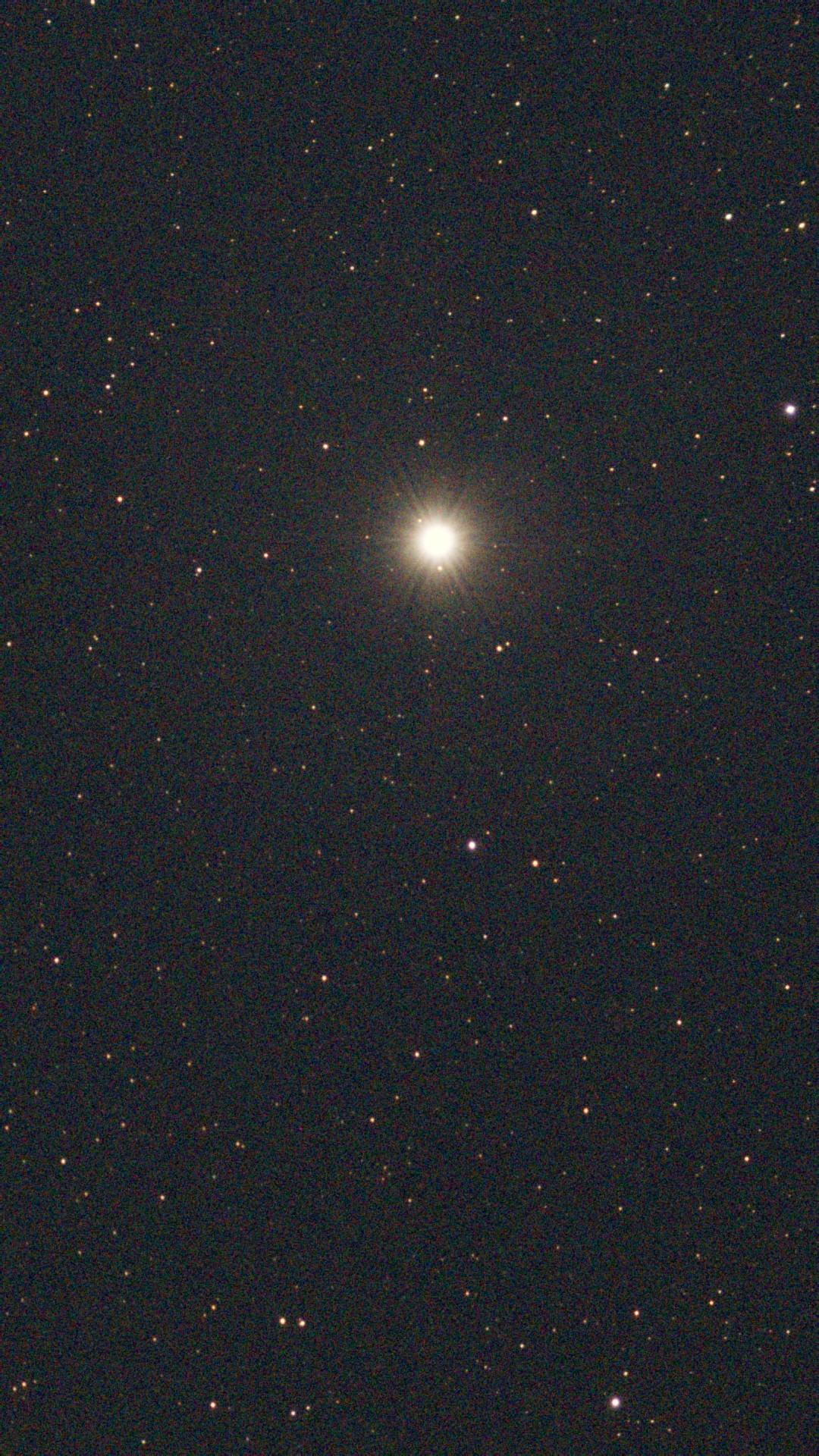
Hello, I discovered I have a problem with my Seestar S30 when shooting bright objects, like Mars, Vega, Arcturus, etc. Telescope is fine with low light items, like galaxies, nebulas, etc. But with a strong star a weird reflex appears. The lens are absolutely clean and pristine, it seems something internal. This is very annoying. Can you tell me what to do ? Thank you. Here are some pictures.
For very bright stars, it’s best to reduce the exposure or avoid shooting them too brightly. This is a physical limitation of the optical system — even clean glass cannot transmit all the light without some reflection, which can cause these effects. Fixing this would require structural changes to block or reduce the reflections, which is very difficult. We hope you can understand this limitation.
Support@Seestar And how can we reduce the exposure in Stargazing mode??
Support@Seestar This sounds very strange to me. So one cannot shoot planets, or regions with bright stars with the S30 ?
The question here is if this is an issue of my telescope or is it a systematic issue, therefore a physical limitation of the instrument.
Can somebody please post a 1 min image of Arcturus or Vega ?
Lilo there is an "adjust" button in the right rail options while shooting in Stargazing, but I don't know if that just affects the LIVE view or if it changes the settings of the images being captured/saved after the adjustment is made. I'll make an adjustment in my current imaging in a few minutes and see if my final images of the session I'm in right now are different than the images from earlier in the session.
xM2sEYrw
Question for Zwo Astro:
It seems to me an optical issue: is it possible to consider a replacement under warranty?
xM2sEYrw I believe that claiming that something that is unknown or not understood is "a priori" a "reflection" seems unscientific to me. Don't you agree? Especially when there are NASA photographs showing electrical phenomena in the upper atmosphere morphologically identical to the photographs obtained with the Seestar S30 (Journal of Modern Physics 2024,15,1760-1868). *** But, if we accept the unproven hypothesis that these are "reflections," then ZWO will probably have to COMPENSATE those who bought an S30, because the manufacturer has put a device on the market that is unsuitable for photo-astronomy.
Vega 30 sec June 19, 2025
Arriba Thank you Arriba
I have got exactly the same problems with my S30 when taking images of bright stars like Arcturus.
Patric
Ich habe das Problem auch: Bei lichtstarken Objekten (Planeten) zeigt sich oft eine oder mehrere störende Reflektionen. Ist da etwas bei der Optik defekt oder mache ich etwas falsch? Danke, für eine kurze Antwort.
The D. U. C. The phenomenon you are seeing is caused by reflections from the front protective glass. Since the glass cannot be perfectly transparent, very bright stars in the field of view can create such reflections. You can improve this by using a lens hood or avoiding direct framing on particularly bright stars.
Support@Seestar I believe that claiming that something that is unknown or not understood is "a priori" a "reflection" seems unscientific to me. Don't you agree? Especially when there are NASA photographs showing electrical phenomena in the upper atmosphere morphologically identical to the photographs obtained with the Seestar S30 (Journal of Modern Physics 2024,15,1760-1868). *** But, if we accept the unproven hypothesis that these are "reflections," then ZWO will probably have to COMPENSATE those who bought an S30, because the manufacturer has put a device on the market that is unsuitable for photo-astronomy (?).
I believe that claiming that something that is unknown or not understood is "a priori" a "reflection" seems unscientific to me. Don't you agree? Especially when there are NASA photographs showing electrical phenomena in the upper atmosphere morphologically identical to the photographs obtained with the Seestar S30 (Journal of Modern Physics 2024,15,1760-1868). *** But, if we accept the unproven hypothesis that these are "reflections," then ZWO will probably have to COMPENSATE those who bought an S30, because the manufacturer has put a device on the market that is unsuitable for photo-astronomy.