Last night, I had some success with 30-second exposures.
I achieved
25% good frames out of 300 on M1
98% good frames out of 100 on M81
Here is what I did to achieve this:
As always, I leveled the tripod first. I replaced the mounting bolt with a solid stainless steel 3/8" bolt that goes all the way into the Seestar mount (the original was a 1/4" bolt with a 3/8" insert). I also added a washer under the bolt (2mm thick and 27mm diameter) for better force distribution.
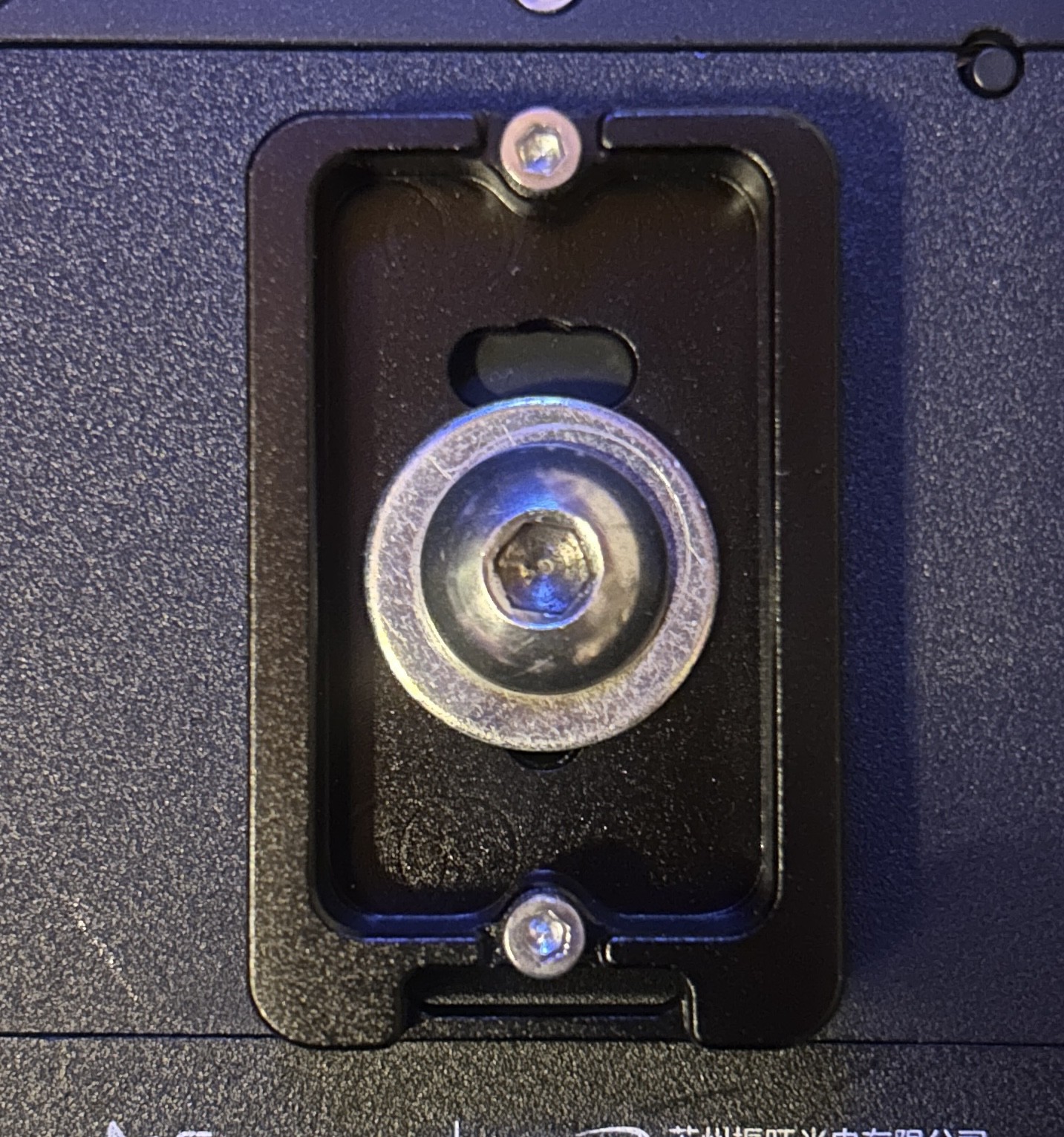
I added 4 pounds of extra weight to the tripod, but this time I mounted it with a significant offset to counterweight the Seestar; usually, I mount it to the center of the tripod. I performed PA (Polar Alignment) with 0.0–0.1 accuracy as usual.
The first 10 subs were discarded, but I was watching closely and noticed a pattern. At first, the trails are long as the Seestar tries to catch up. They get shorter and shorter, finally becoming almost perfect for 30s subs.



I tried capturing different parts of the sky, and the same pattern occurred repeatedly, with a varying number of dropped frames before the first good one. When I reached M81, I got good frames from the very first one, and only 2 out of 100 were rejected.
So, here is my guess: The Seestar's tracking speed is too slow for 30s subs near the equator. Once it captures the first image, it tries to accelerate, and the trailing gets shorter. Sometimes it moves faster than needed. After capturing a good frame, it probably tries to maintain that speed, but it loses it during dithering and has to start back at square one.
Play in the arm, intermittent wind, ambient temperature, and battery voltage are all variables we don't always account for that make this process harder. My conclusion is that the scope has certain baseline settings or accuracy for sidereal speed for objects closer to the poles, but it struggles to maintain images closer to equatorial regions.
I hope ZWO is working hard to improve this, as it seems possible to solve with software. For example, they could save speed control values in a cache for each part of the sky in 5–10 degree steps—essentially "adaptation values" individual to each unit. This would help eliminate issues with assembly quality or imperfections in parts. I really think ZWO needs to see this and work in this direction.
For my part, I’m going to keep looking for ways to improve stability and the PA process; my next step is a high-quality wedge instead of a fluid head. I personally don’t want to go back to 10s subs since I’ve seen how much better the final image is (even with 75% rejected frames).
Thanks for reading, and I wish you all clear skies!


